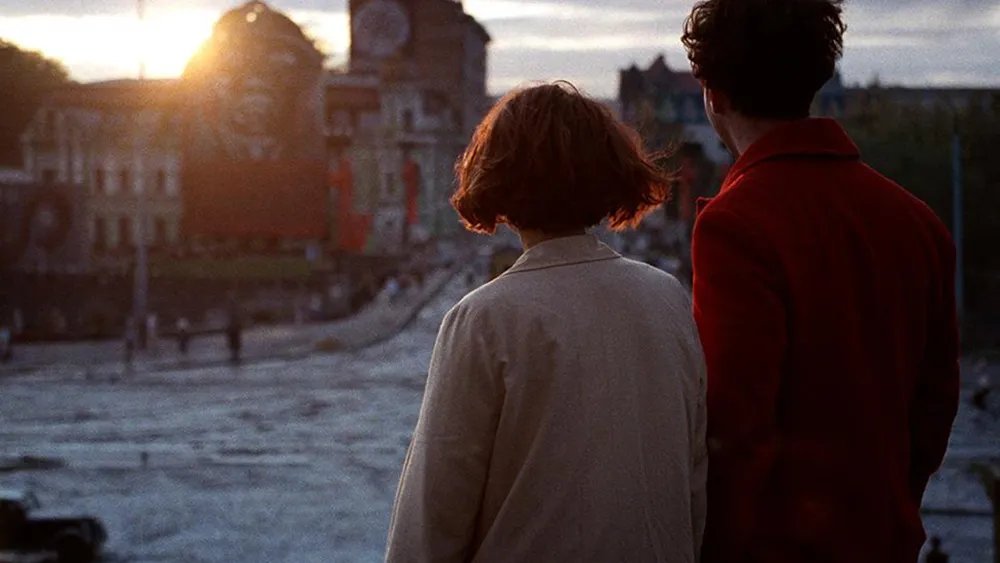
The Venice Film Festival found itself under fire in the weeks leading up to opening night over the inclusion of “DAU,” by Russian filmmaker Ilya Khrzhanovsky, in the main competition of its 83rd edition.
In a joint statement released on Aug. 17, the Ukraine Ministries of Foreign Affairs and Culture and the Ukrainian Embassy in Italy criticized the prestigious fest for selecting what they claimed to be “a project linked to the Russian state and its networks of influence,” maintaining that the decision helped to “restore respectability” to Putin’s pariah state.
The pushback was swift. In an Instagram post responding to the criticism, Venice artistic director Alberto Barbera insisted that “‘DAU’ is not a Russian film; it is not pro-Putin propaganda.” Meanwhile, Khrzhanovsky took to Facebook to refute allegations that the latest installment in his long-running project was backed by Russian financing or is “an instrument of Russian state cultural policy.”
Speaking to Variety on the eve of the festival, the director doubled down, saying: “Since the war started, there was no question of what side I am on, because I am on the side of Ukraine.”
Coming on the heels of a recent controversy surrounding the Venice Art Biennale’s decision to mount shows by Russian and Israeli artists, the “DAU” dust-up speaks to a larger question hanging over film festivals, cultural institutions and other events that, in the immediate aftermath of Russia’s full-scale invasion of Ukraine, largely heeded calls for a boycott of Russian cultural exports.
As the war drags deeper into its fifth year, a rapprochement of sorts is underway. While relations with Moscow remain frosty for much of the world, Russian filmmakers are gradually coming in from the cold.
In the past year alone, Russian-born directors have scooped prizes in Venice (Nastia Korkia’s “Short Summer”) and Cannes (Andrey Zvyagintsev’s “Minotaur”), while Khrzhanovsky is joined on the Lido by fellow exile Victor Kossakovsky, whose latest documentary, “Holly Wood Dust,” premieres out of competition.
Though the Oscar-nominated Kossakovsky (“Gunda”) and Khrzhanovsky both left Russia in the 2000s, a broader exodus began not long after Russian tanks rolled into Ukraine in February 2022. Whether fleeing in protest of the Kremlin’s war machine or out of fear of the brutal crackdown on dissent that quickly followed, many of Russian cinema’s most prominent voices left the country, forging exile communities from Tbilisi to Paris, from Berlin to L.A.
“There are two Russias right now,” says two-time Oscar nominee Alexander Rodnyansky (“Leviathan”), in Venice with Kornél Mundruczó’s “Place to Be,” starring Ellen Burstyn and Taika Waititi. “Russia as the country with this regime controlling everything and censoring all the attempts to speak freely about what’s going on. And there is a Russia outside of the geographical borders.”
That diaspora is experiencing exile in a variety of ways. The Kyiv-born Rodnyansky, who was sentenced in absentia to 8.5 years in prison by a Moscow court over his opposition to the war, remains determined to support dissenting voices and “make movies with Russian filmmakers, especially young ones, who I feel myself committed to help.” Now based in France, Zvyagintsev likewise remains a trenchant critic of a country he says he has “no intention” of returning to. Though filmed in Latvia, his Cannes Grand Prix-winning “Minotaur” is as scathing a portrait of Russian society under Putin as the director’s previous works.
For other filmmakers, the westward flight has offered an opportunity for reinvention. Kantemir Balagov’s “Butterfly Jam,” which opened the Directors’ Fortnight section this year in Cannes, stars Barry Keoghan and Riley Keough and is set in an immigrant community in Newark. Director Kirill Sokolov likewise set off for Hollywood; his latest, the blood-soaked revenge farce “They Will Kill You,” stars Zazie Beetz and Patricia Arquette.
Sokolov’s dark comedy “No Looking Back” was among the first films to bear the brunt of the anti-Russia backlash in 2022, when it was pulled from the Glasgow Film Festival over financing that came in part from the Putin regime. The “DAU” controversy in Venice was similarly driven by ties to Russian financiers who would later be sanctioned following the Ukraine invasion.
But Khrzhanovsky stresses to Variety that their involvement in his decades-spanning project ended years ago; his Venice-bound film is a German production, co-produced with France and Sweden, and has received no Russian funding for seven years, according to the director.
As these and other Russian filmmakers set up new lives in exile, the financial ties that once bound them to Putin’s state have been cut. That, as much as their vocal opposition to the Ukraine war, arguably weakens the case for protest and will ease further reentry into the international film community.
“They’re shot in Europe. They’re financed in Europe,” says Laurent Danielou, of Paris-based Loco Films, who’s currently financing two features from émigré Russian directors. “They’re not Russian anymore.”
About The Author


